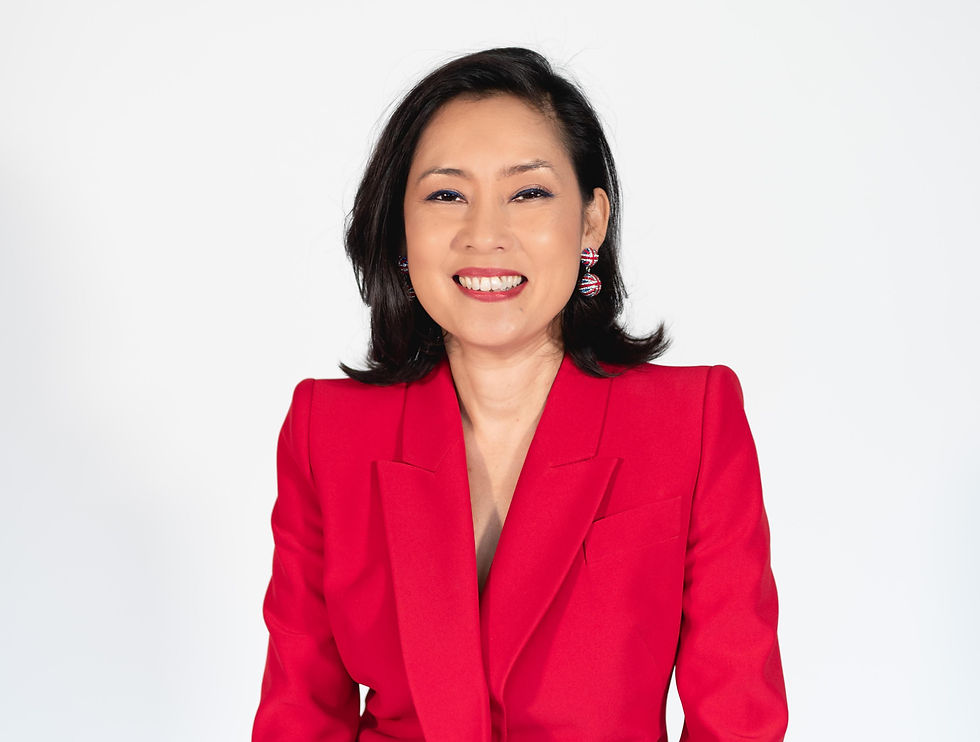
On A Mission to Enrich Retirement for Women
An interview with Hannah Martin of RichRetree.com
"Too often, people assume retirement planning is solely about building a big enough pension pot. While financial security is essential, we often don’t consider what other needs we have to meet for a happy life."

Hannah Martin is a leading women's pensions expert and the founder of Richretiree.com, a website that helps women over the age of 45 take positive steps to prepare for their future, and be as financially independent as possible when they retire. A respected commentator in the finance space, Hannah frequently addresses the critical issue of the gender pension gap, advocating for better awareness and solutions to help close this disparity. Through her expertise, Hannah is committed to transforming how women plan for their retirement, making secure financial independence an achievable reality.
What was the core inspiration behind launching Rich Retiree? Can you share the moment you realised there was a niche in the market for a website dedicated specifically to helping women prepare for and thrive in retirement?
About three years ago, I read a statistic that women’s pensions were worth 35% less than men’s. This shocked me and I made a social media post about it. PensionBee then got in touch, and I have worked with then over the past two years, creating educational content to help women bridge this pension gap.
Earlier this year, I realised how much I had enjoyed creating this content, and how little information there was still out there about how to plan for your retirement. And not just financial planning; my husband and some of my friends have just turned 60, and none of them look or act like the traditional image of a ‘pensioner’.
I realised that there was nothing inspiring that showed me and my friends what the kind of retirement we wanted looked like, so I decided to create it myself. And so Rich Retiree was born!
Your personal story is one many female CEOs and freelancers can associate with - not opening a pension until your late 40s. What were the main financial and emotional factors that led to this delay, and what was the catalyst that finally spurred you into action?
In many ways, I am typical of the women I have created Rich Retiree for. I had a career I loved in my 20s and 30s, but left it behind when I had my second child in my late 30s. There was no auto-enrolment when I was working, so I didn’t save towards a pension. I was also trying to get on the property ladder and renovate my home as I was building my career, so there wasn’t any spare money to invest in a pension.
After I had my daughter I went freelance, working from home in the hours I had available around childcare. I had no idea of the tax benefits of saving for a pension, and again, no spare money to invest.
The first few years of starting my first business, Talented Ladies Club, money was still tight, but as I got to my late 40s, I had started building up profit. One year my accountant asked me why I wasn’t saving into a pension, as this would reduce my Corporation Tax bill. This was the first time I was aware of the tax benefit, or had even seriously considered investing in a pension.
Around the same time, a friend casually mentioned how much we needed in a pension for a comfortable life when we retire. I was horrified when I realised how far off this figure I was - until that point I had no idea what kind of financial goal I should be aiming for.
Since then, I have invested every penny I can into my pension. Talented Ladies Club makes good money now, but I still live fairly frugally (but happily!) as I would rather reap the tax benefits and ensure I have a comfortable life later on.
How did the personal experience of playing catch-up shape your approach and philosophy as a pension expert now advising other women?
I’m not a natural financial expert. I studied fine art at university, but dropped out before I graduated. So I am not highly educated, nor do I have a natural affinity for finance!
As I have just explained, I came to financial planning late in life. But I have since embraced it, as it gives me confidence in my financial position now, and my future, and enables me to make more empowered decisions.
I think this puts me in a strong position to help women. I get that money isn’t a fun topic for many people, especially if they don’t feel like they have enough, or worry they have left it late.
I want to make financial planning relatable for women, and encourage them to understand their financial situation and take positive action. I believe that there’s no shame in having made no plans at any age; the most important thing is to start today, if you can.
The name Rich Retiree is intriguing. What does the term mean beyond just the monetary value of a pension pot?
It means ‘rich’ in the truest sense of the word! There are plenty of miserable millionaires in the word. To me, a truly rich retirement is one where you have enough money to meet your needs, but more than that, you have good health and a life packed with wonderful friends and family, meaningful experiences and joyful days. A life that has purpose and contentment. That to me is true wealth and what I hope for all women.

As a UK women’s pensions expert, you frequently highlight the issue of the UK gender pay gap. In your view, what are the most significant, often-overlooked drivers of the disparity in women's retirement savings?
Sadly, the biggest reason is having children. Women are more likely to be the parent whose career takes a hit - and often never fully recovers - and this puts us at a significant financial disadvantage in missed earnings and pension savings.
This issue is even more significant when it comes to single parents. According to a report by the Money & Pensions Service, only 38% of single mothers are in full-time employment, compared to 78% of single fathers.
When women do return to work after having children, we can either find ourselves on a lower income (twice as many men in the UK earn over £35,000 a year compared to women) or we are forced to work for ourselves, which means we miss out on workplace pensions and auto-enrolment.
Exacerbating this issue is a frequent lack of confidence or action when it comes to financial planning, as highlighted in the Money & Pensions Service report, which found that 60% of women have no plan for their retirement, compared to just 44% of men.
Women disproportionately take time out of the workforce for caring responsibilities. What is the single most important action a woman can take during a career break to protect and future-proof her retirement savings?
If you can, keep up with your pension contributions - even if that means diverting some of your family finances into your pension. Even small, regular payments can help with your future finances, thanks to compound interest.
Also, understand your pension rights. If your husband or partner has a pension, make sure you are a nominated beneficiary, to protect your entitlement to it if they were to die. And if you divorce, you can ask the court to split your spouse's pension with you in a process called a Pension Sharing Order. Obviously I hope neither of these scenarios arise, but it is important to be aware of your rights!
While auto-enrolment has increased pension participation, it often doesn't solve the deeper problems. Where do current UK pension regulations fall short in protecting part-time workers, who are predominantly women?
In some ways, auto-enrolment gives us a false sense of security. We assume that our pension planning is covered because we have auto-enrolment, but the truth is that it’s not enough for most people to have a comfortable retirement.
Auto-enrolment also doesn’t solve the issue of women taking time out of their career to raise children, or earning less than men. Often, when women return to our career, we either work part time, so miss out on the threshold, or we work for ourselves as it’s easier to work around a family - so we miss out on auto-enrolment.
I think more education needs to happen so women are aware of their financial options and rights. For example, there are attractive tax benefits into saving for a pension if you are self-employed or run a limited company, but they are not well known.

Beyond the financial and employment gaps, do you find there is a confidence gap in how women approach investing and retirement planning, and how does Rich Retiree help to bridge that?
Absolutely. Too many women I speak to have never considered their retirement finances. This might be because they assume their husband or partner has it covered, retirement feels too far away still to worry about, or they worry they won’t have enough and are trying not to think about it.
I want to bridge this by making financial planning feel do-able and even fun. I want women to start feeling excited about what life might look like when they stop work, or reduce their working hours (I suspect many people will opt for a hybrid retirement for a few years). I also want them to feel enlightened about their financial position and empowered to take positive action.
I aim to achieve this with educational content and accessible resources.
For women in their 40s or 50s who are just now starting to think seriously about their pension, what are the first three practical steps you advise them to take immediately?
First of all, understand your financial position right now. Find out how much is in your pension (if you have one) and check you don’t have any pensions you have forgotten about.
Next get an idea of how much money you might need when you retire. Think about what kind of lifestyle you would like - what is important to you, and what you can do without if needed. Work out how much it costs you to pay your essential bills, and what extra you might need to enjoy your retirement.
And finally, look at what your pension gap is; how far you are away from being able to afford the lifestyle you want when you retire. Don’t panic if it seems like a lot. Even saving a little every month can make a difference, thanks to compound interest and tax benefits/employer contributions. The most important thing is to know where you stand and take positive action.
You talk about preparing physically, emotionally, and financially for retirement. Why is this holistic approach essential, and what does the "emotional" preparation involve?
Too often people assume retirement planning is solely about building a big enough pension pot. While financial security is absolutely essential, we often don’t consider what other needs we have to meet for a happy life.
These include enjoying good physical and mental health - the ‘emotional’ preparation. In order to enjoy good mental health, we have a number of basic, needs that need to be met. These include things like setting and achieving goals, giving and receiving attention, being part of something bigger than ourselves, being stimulated and challenged, and feeling in control.
I believe it’s important to consider these needs when planning for what could be a significant portion of our life, and making any changes needed to your life to get it moving in the right direction.
Looking ahead, what is the next big area of focus or development for Rich Retiree to further empower women in their financial independence journey?
We know there’s a gender pension gap, and this is widest for women in their 50s. Simply telling them they’ve left it too late to catch up is counter-productive, and can lead to more inaction.
I want to flip the financial conversation around, and instead of telling people what sum of money they need to reach for a good retirement (and probably horrifying them into inaction), get them to consider what kind of lifestyle they want when they retire, and how much that might cost them.
My goal is to get women feel confident in planning their life and empowered in managing their finances, so they can take positive action and have a better retirement when they get there.
If you could give your readers one piece of non-financial advice to change their retirement trajectory, what would it be?
Think about what kind of retirement you want. You may be surprised (or not!) to learn that many people have never considered what they want to do with their life after they stop working - a period of time that could span two or more decades!
So think about how you want to spend your time, what will get you out of bed in the morning, and what is important to you. Have a clear vision of what your ideal retired life might look like, and consider any changes you can make to your life not to get it moving in that direction.
Connect with Hannah on LinkedIn here
Find RichRetiree.com on socials using the links below: