Rewiring the Corporate Brain: Why Music is the Ultimate Tool for Employee Retention
An interview with Tessa Marchington
From surviving heart surgery as an infant to becoming an award-winning pianist and Associate of the Royal Academy of Music, Tessa Marchington has always viewed music as a vital lifeline rather than a luxury. In this insightful interview, she explores how her childhood "first language" evolved into Music in Offices, a pioneering venture that brings choirs and instrumental tuition into the heart of the corporate world. Marchington discusses the science of stress reduction, the "rewiring" of the corporate brain, and her mission as a City of London Councillor to reclaim the urban landscape through the transformative power of collective song.
Beyond its artistic merit, Marchington highlights how music serves as a critical tool for employee wellbeing and staff retention, noting that nearly 80% of her students feel more inclined to stay with their companies after integrating music into their work lives. By replacing cortisol with connection, these programs transform the office from a high-pressure vacuum into a restorative community where talent feels valued and revitalised.

Music in Offices
As an award-winning pianist and an Associate of the Royal Academy of Music, how did your early life as a performer shape your belief that music is a fundamental human need rather than just a luxury?
Music was very much part of my childhood. As the youngest of four, I grew up with the sound of my brothers practising their instruments and my mum teaching piano. Music became the soundtrack to everyday life, the morning routine, cooking in the kitchen, bedtime, and Christmas, when we would prepare carols to play together in local care homes. Music was definitely my first language. I had heart surgery as a baby when I was just 2 weeks old, after being born with a blocked aorta and needed speech therapy from a young age following that. In lots of ways I definitely felt calmer and more connected when I was at the piano. It was and still is a place of comfort. From as far back as I can remember, it felt like an extension of how we communicated with the world.
That early experience shaped how I understood music long before I understood performance. When I began playing and performing seriously, I saw how people from all backgrounds responded in the same deeply human way, how a melody could calm, connect, or comfort without needing explanation. It made it impossible for me to see music as a luxury rather than something essential.
My training at the Royal Academy of Music gave me discipline and refinement and exposed me to a fully immersive musical world, strengthening what I already believed: music’s real power isn’t in perfection or prizes but in bringing creative energy to a place and expressing what words can’t. For me, it remains a fundamental human need, a way of connecting, whether you are 5 or 55.
You founded Music in Offices in 2007 after seeing your brother, a lawyer in the City, not enjoying the environment and pace of city life. Could you tell us more about that moment and why you felt a choir or a piano lesson was the specific ‘antidote’ he needed?
The idea for Music in Offices came from this personal place. Watching my brother work as a lawyer in the City, I could see how intense, fast-paced and relentless his world had become. His days were full of screens, deadlines and pressure, and what struck me most was how little space there was for anything that allowed him to relax in a joyful way. To find time for some fun that wasn’t going out drinking, it had to be within the working day.
I didn’t see music as a distraction from that environment - more as a counterbalance. A choir or a piano lesson felt like the perfect antidote because it brings people back into their bodies and their breath and gives a spark of creativity. Singing together in a choir forces you to slow down, to listen, to connect with others in a way that has nothing to do with hierarchy, performance targets or job titles. Sitting at a piano does something similar, it creates a quiet, focused space where as an adult you can learn something new, learn in a completely different way to work patterns making a moment of humanity, creativity and connection in the middle of a highly pressured day. Music in Offices grew from that simple belief, that music isn’t just for concert halls or childhood lessons, but should be a vital, restorative part of everyday.
Many professionals in the City of London view their workday as a series of high-pressure tasks. When you began approaching businesses, what was the most common misconception they had about bringing music into the boardroom?
When I first started approaching businesses, the most common response was “Have you got the right number? What’s a choir? We’re a bank…” I was met with the misunderstanding that music in the workplace would be a distraction rather than a business benefit. Many people imagined it as something light-hearted or frivolous (and often initially still do) but not something that could contribute to creating a high-performing, inclusive environment. I had to quickly learn to use the corporate language about business benefits, retainment of staff, attraction of talent, positive wellbeing and music being a vehicle for community building and inclusion. We still get initial reticence but with our roster of clients and unarguable testimonials we have a strong case from the outset and I believe in the importance of what we can effect through music more than ever.
There is a barrier people need to overcome that music is only for the “musical”, that you need talent, confidence, or prior experience to take part. I often meet people who think that singing will make them feel exposed or judged, rather than supported. But then when they join a choir the effect can be life-changing. In fact, one choir member at Christie’s told me that “It gave me a roleat News International said “My piano lessons are a small life-changing moment in the week.”
Music isn’t an interruption to the workday; its a way of restoring the people doing the work.
Beyond just feeling good, what does the data tell us about how choral singing and music tuition actually impact cortisol levels, employee stress, and the number of sick days taken by staff?
There aren’t large, definitive studies yet showing that choir participation directly reduces sick days taken by employees. We have engaged with the Royal Northern College of Music and look forward to working with their Wellbeing Lead Dr Sara Ascenso on exactly this though in the coming weeks.
We know the combination of lower perceived stress, stronger social support, improved wellbeing and potential immunological benefits suggests a meaningful pathway through which musical activities could contribute to fewer stress‑related absences over time, even if that specific metric isn’t yet robustly measured in workplace research. In one of our surveys gathering more quantitative data, 96% of our pupils said they felt less stressed after their music lessons, 98% of our choir members said that being in a choir had a positive effect on their mental wellbeing, 83% of our pupils said that they were more productive after their lessons and 79% of our pupils said that they were more inclined to stay at their companies. We know it, we see it and feel it but we haven’t measured it yet.
Music in Offices has delivered over 60,000 music lessons to date and you’ve noted that in one law firm alone, 20 people took up instruments ranging from the violin to the banjo in just three months. Why do you think picking up a physical instrument is so effective for switching off the corporate brain?
Learning to learn something new for an adult requires an entitativity of the brain. You are really focused on the minutie of connecting your fingers with the notes and learning a whole new language. One of my pupils who was co CEO of DLA Piper said to me that he loves the micro detail required in learning the piano, as it sits in such contrast to the macro global addresses and big picture thinking he does all day.
One of our Linklaters pupil, a systems manager in IT said “I know that after having my piano lessons I’ll find the solutions to the challenges of the week.” It does completely rewire the brain.
You have a fascinating background in African Music and Literature from Leeds University. How do the communal music traditions you studied there inform the way you set up office choirs today?
I was definitely inspired by the role music plays in communities across Africa. I went to music festivals in Malawi, and Morocco when I worked with Songlines Magazine, picking up the infectious joy and love of music being everywhere and for everyone. The context I’m working in with corporates is obviously very different, so I wouldn’t say it’s informed the process of how we set up a choir now, but the principle of music and joy being part of the fabric of daily life was definitely inspired by my African studies.
As a Councillor in the City of London, you’ve become a vocal advocate for reclaiming the streets through culture. How does your role in local government complement your mission to bridge the gap between business and the arts?
I sit on the Culture, Heritage & Libraries Committee and have played a very active role in developing the new culture strategy for the City, I’ve been very vocal about setting up a new culture fund which I’m pleased has now been voted in as a priority for the strategy, and as a Governor for Guildhall School of Music and Drama, where I studied as a Junior, I’m able to introduce my community of city workers to their events and to the board. I broker many introductions and hope I create opportunities for reciprocity between arts and business.

You recently spearheaded the "City of Women Singers" event at the London Stock Exchange. How does singing together specifically help women in senior leadership find their voice in environments where they might traditionally feel unheard?
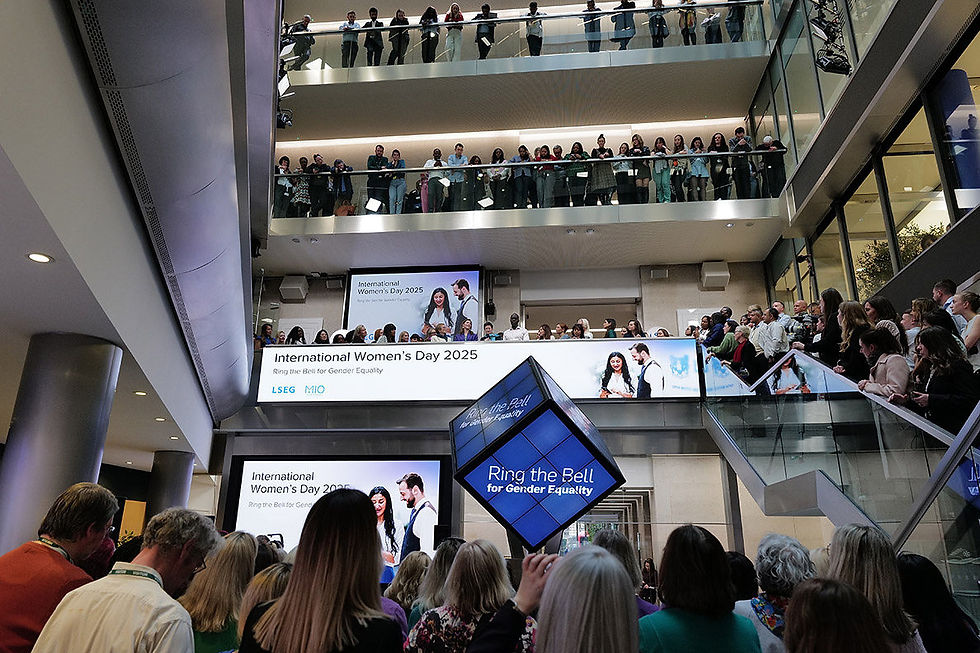
Singing together at the City of Women event, especially at the London Stock Exchange, has been about far more than performance. It’s about reclaiming space for women in environments where they are too often unheard or unseen, and celebrating their voices from history, stories and leadership in a way that goes beyond the boardroom. I had the privilege of interviewing inspirational women Dame Julia Hoggett, Dame Steve Shirley, Akua Opong and fellow Councillor Florence Keelson-Anfu who are both very inspirational women working at the Stock exchange and their words were played alongside those of one of the first women to join the trading floor Jane Partington, and Hester Pinney who had a lace empire in the Royal Exchange in 1682. These words were interspersed with song and it felt very powerful to stop and listen with 200 other people filling the balconies at the LSEG.
What’s been especially moving are the reflections we’ve had from participants to this project. Many have spoken about how the event made them feel truly valued for their experience and contribution as well as reconnected with the City itself. “As a visitor and ‘non-London-based’ it brought me very close to the City, almost as if I would be an inhabitant”
“You are demonstrating through creativity and positivity, the many and multiple aspects of gender inclusion and the value for all in an inclusive society.”
“It’s a reminder that although much has changed, there is a long way to go to create more opportunities for women. I think also that seeing an event like this surprised many who feel the City is stuffy.”
“It is a two-sided value. For the singers, to (re)discover a place and finding new ways of inhabiting it and make it their own; for the audience, to experience the city in a different way that breaks with the daily routines and opens up the potentiality a city has”
“It made me feel valued as someone who has worked in the City for over 40 years”
Music creates presence and a moment when people stop and listen. When women stand side by side in song, they are both literally and metaphorically heard. That shared experience shifts how participants see themselves and each other, not just as professionals, but as voices in a collective narrative about contribution, progress and pride. It gives women a platform to be visible and valued in a context that traditionally hasn’t prioritised their voices.
By weaving song with story and history, City of Women becomes a celebration, not just of individual achievement, but of the collective power of women to shape culture, community and connection through music.
How has Music in Offices adapted to the hybrid world to ensure that remote or isolated workers still feel the sense of belonging that a choir provides?
Our hybrid model has really broadened access to Music in Offices and strengthened participants’ sense of belonging. Combining in-person sessions with online lessons means anyone can join, no matter their location or schedule. A perfect example was the Aviva Choir, who created a Christmas e-card in collaboration with their office choirs across the UK, a project that had a real impact on connection and togetherness. Being able to dial in online when it’s more convenient ensures no one misses out, and shows how music can break down barriers, build community, and create a shared sense of belonging, even in a hybrid world.
Finally, what is on the horizon for the rest of this year? We’ve heard whispers of a "Battle of the Bands" competition and performances on iconic roof terraces - what can City workers look forward to in your upcoming event calendar?
We have a very full calendar of events this year, and really, every year! In March, we have our end-of-term concerts for pupils and choirs, taking place in a variety of wonderful spaces: one at Blüthner Piano Centre, one in the music room at Norton Rose Fulbright (my very first client back in 2007!) and a choir concert at St Katherine Cree Church. We are celebrating International Women’s Day with 2 events in the City of London, on March 12th at lunchtime in The Royal Exchange and we’re closing the markets on March 24th at the London Stock Exchange in song again!
We’re also currently running our arts, health & wellbeing series of workshops at the NLA, in the Guildhall on Aldermanbury Street, not a traditional concert venue, but a fantastic space to bring music into the context of the built environment and policy, which sits right at the heart of our mission.
In June, our Office Choir of the Year Competition will be back, complete with summer roof terrace performances. Later in the year, we’re partnering our office choirs with city school choirs for a project called Greening the City in Song, with joint performances across City Gardens, culminating in a major City Square performance on Make Music Day (June 21st).
There are so many ways to get involved, whether as an individual singer or player, or as part of a choir, and I love seeing the different ways people bring their voices to our projects.
Tessa Marchington is an award-winning pianist, Associate of the Royal Academy of Music, and a visionary advocate for the transformative power of music. In 2007, she founded Music in Offices, a pioneering social enterprise that provides musical tuition and choirs as an antidote to high-pressure corporate environments. Through her work, she bridges the gap between the arts and business, proving that music improves employee wellbeing, retention, and inclusion. Beyond her business, Tessa serves as a Councillor in the City of London, where she champions cultural strategy and gender inclusion. Her mission is to restore humanity in the workplace through the restorative power of music. Follow Music in Offices on LinkedIn here.