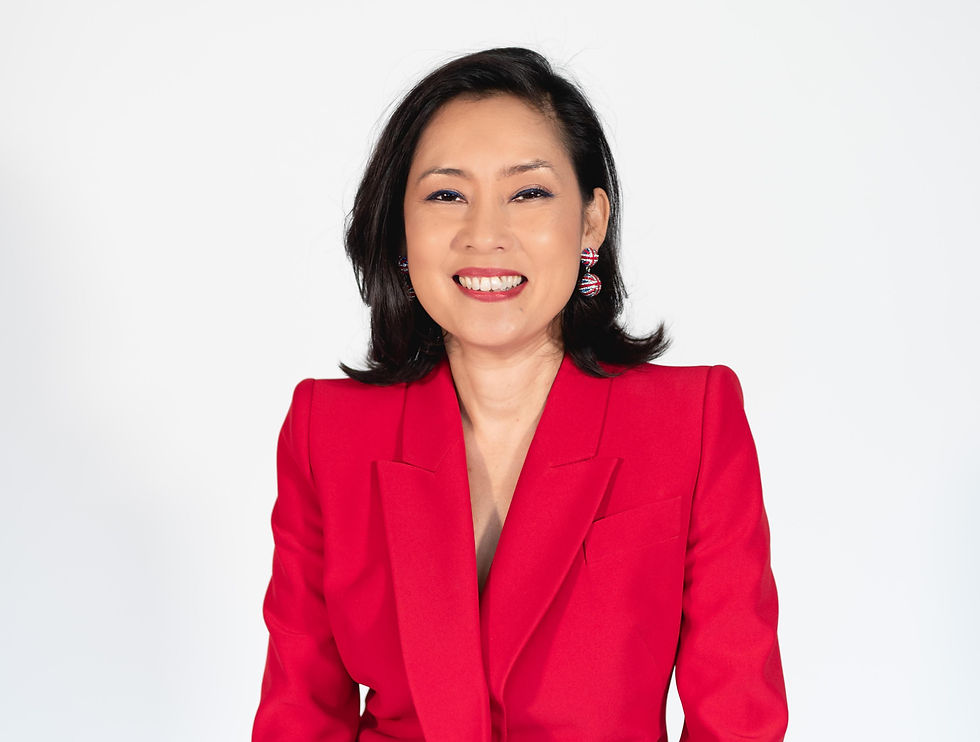
Redefining Luxury: Shreya Vohora on Health-Led Design, AI and the Future of Living
Luxury is no longer just about what we see, it’s about how we feel. Few understand that shift more clearly than Shreya Vohora, who is quietly transforming the interiors space by placing health, longevity and human experience at its core.
As the founder of Interiors With Art and co-founder of RightShop, Shreya is bridging the gap between design, technology and wellbeing rethinking not just how spaces look, but how they function for the people living in them.
We sat down with Shreya to discuss the personal story behind her business evolution, the role of AI in design, and why the built environment is fast becoming one of the most important conversations in global health.

What inspired you to reposition a traditional luxury interiors business into a health-led, wellbeing-focused model?
Shreya: It started with a personal health story. Getting unwell sent me on a journey that ended up covering building biology, functional medicine, psychology, longevity science and everything in between. I am also dyslexic, which means I see patterns across things others often look at separately. I did not have an MBA and instead spent years reading, studying and speaking to people from completely different fields until those threads started forming a picture that was hard to ignore.
At the same time, I was watching luxury itself redefine. It has moved away from objects and status and towards feeling, experience and emotional connection. So much of that comes back to health, how you sleep, how you think, how your nervous system responds. Health is not separate from the luxury conversation. It is at the centre of it.
How did your personal insights into health, longevity, and sustainability shape your approach to both Interiors With Art and RightShop?
Shreya: Getting unwell pushed me to understand the whole system. What emerged was not one insight but many but perhaps the biggest thing was seeing the missing connection between how we design and build spaces and how people actually live in them, and what that means for their health over time.
RightShop came from that same frustration turned outward. There is enormous demand for transparency in this space but also enormous confusion, driven by influencer marketing, contradictory information and labels that are deliberately hard to decode. Both companies exist to take something genuinely complex and make it straightforward.
Can you share the story behind the creation of RightShop and how AI helps in sourcing healthier products?
Shreya: My co-founder and I were brought together by a shared personal health story and a frustration with navigating product safety and ingredient transparency. We had also worked together previously on a pilot with a large retailer in Portugal. For me it started with hormonal issues that pulled me into the world of endocrine disruptors, and once you are in that world you realise how hard it is to navigate. We experimented, pivoted, and kept coming back to the same insight: the problem is not a lack of information, it is a lack of personalisation and transparency. AI is what makes it solvable at scale, mapping ingredients to individual health profiles and translating years of research into something someone can act on in moments.
How do you translate concepts of wellbeing and longevity into tangible design choices for high-net-worth clients?
Shreya: Wellness has become a genuine lifestyle priority for this client, not an aspiration but an expectation. The starting point is always the individual, what do they dream of, what does a better life actually look like for them.
We build from that rather than from a template, working across every layer from how the structure is built through every material and finish to how the home performs for sleep, focus and long-term health. One honest reality is that the supply chain for genuinely health-conscious specification is still limited, and part of our role is helping clients make the best possible choices within what exists. Doing meaningfully better is always the goal.
What trends are you seeing in the luxury market where health and sustainability intersect with design?
Shreya: Health and wellness have become non-negotiable, especially among millennial and Gen Z wealth. Serious money is being spent on longevity, preventative health and experiences, and people are far more conscious about what they put in their bodies and environments than even five years ago. Sustainability is evolving alongside it, moving beyond carbon and energy towards what something more value based concerns as well.
The hospitality industry is setting the pace with sleep-focused rooms, eco friendly rooms, and recovery-centred spaces, and residential is following. It is still largely amenity-based for now, but the shift is towards health built in from the start. And it is not just about the space anymore, the experience of the entire journey, from how a project is conceived through to how it feels to live in, is becoming part of what people expect.
How do clients respond when you introduce health-led principles into their projects, especially in traditional luxury spaces?
Shreya: It is never about perfection. The goal is better informed choices and meaningful progress from wherever someone currently is. Some clients are already deep in the longevity and preventative health world and immediately understand the built environment through that lens. Others have never connected their home to how they feel. The skill is finding the right entry point and keeping it easy, practical. We meet people where they are and go from there.
What have been the biggest challenges in scaling a service-led business internationally?
Shreya: We are building the ship while sailing it, and we are still solving this continuously. Scaling internationally, transforming the philosophy of the business and navigating a technological landscape changing faster than anyone in our industry has seen before, all at once. Most companies tackle one of those at a time. What holds it together is being completely clear about what can never be compromised, and building everything else around protecting that
How do you approach expanding into emerging markets such as the Middle East, India, and Europe?
Shreya: Almost all of our growth has come through long-term relationships, often across multiple homes, countries and generations with the same families. That has given us a deep understanding of cultural nuance you simply cannot acquire quickly, how decisions get made, how trust is built, what matters to a client whose life spans multiple geographies. The Sotheby's joint venture in India is the first formal step in making that global reach deliberate, built on over a decade of real experience in these markets. Combined with our health-led philosophy, London design thinking and a client-first approach, we are well positioned for where these markets are heading.
How do you maintain a balance between bespoke service and operational efficiency when scaling globally?
Shreya: The client experience is the filter for every operational decision we make. Bespoke service and efficiency are only in tension if you try to systematise the wrong things.
How do you see AI transforming sourcing and decision-making in luxury interiors and construction?
Shreya: One of the biggest drains in our industry has always been the energy it takes to make decisions that should be straightforward. AI, used correctly, strips out that administrative layer and gives creative time back to the people whose job it actually is. On sourcing, being international has forced us to build multiple supply chain circles rather than defaulting to familiar names. AI accelerates that enormously, identifying who has capacity, genuine innovation and the right capability across a far wider landscape than we could map manually. The result is a meaningfully higher standard of what we are able to offer.
What role does technology play in making health-led design more accessible and measurable?
Shreya: Two parts to this. Accessibility comes from taking complex knowledge and making it genuinely usable, which AI now makes significantly easier. The gap between what a specialist understands and what someone can act on is closing fast.
On measurability, I think about two signals. Wearables like Whoop and Oura now give us real-time data from the body. The second signal comes from the environment, air quality, light, temperature etc. Matching those two is where the real intelligence lies. A dip in your sleep at 2am that correlates with rising CO2 in your bedroom is something you can now see, act on and measure. Add emerging tools like microbiome-reading toilets and we are moving towards homes that can sense, interpret and respond in real time. That is what makes health-led design measurable rather than just aspirational.
Are there any unexpected insights you've gained from integrating AI into your workflow?
Shreya: The biggest shift is how I use AI in last few months especially. I moved from using it as an assistant to something much closer to a thinking partner and team member, and the quality of that engagement is genuinely different.
How do sustainability and human health complement each other in the built environment?
Shreya: At their core they are the same principle, care for life and preservation of it, and sustainability is something I feel deeply about. The problem is that when the movement gained momentum, certain industries, particularly the petrochemical industry, shaped what it meant in practice. A great deal of what ended up in buildings in the name of sustainability was not good for human health. Sustainability done correctly is completely aligned with human health. What is good for people is good for the planet.
You'll be speaking at a UN event on this topic. What key message do you hope to convey to global stakeholders?
Shreya: That the built environment is a public health issue and it is not being treated as one. We have strong standards for fire safety, energy efficiency and structural integrity. We do not have equivalent standards for how buildings affect human health, and that is one of the most significant overlooked gaps we have. Lighting, mould, air quality, chemical content in materials — all have measurable long-term health consequences and none have the regulatory framework they deserve. These issues affect everyone, not just those who can afford to specify differently. The indoor environment needs to be part of the public health conversation at the highest level.
What lessons from your TEDx talk on wellbeing and interiors would you share with entrepreneurs looking to innovate in traditional industries?
Shreya: Ask the question your industry has stopped asking. For us that was what does this mean for human health long term? That one question, applied before decisions are made rather than after, changes everything.
What emerging categories within luxury interiors and construction do you see as high-growth opportunities?
Shreya: Health-led design moving from amenities to infrastructure is the biggest shift - homes that actively support longevity, cognitive performance and recovery rather than just looking beautiful. The expectation around speed and the ability to visualise a client's vision before a single decision is made has also changed completely, and the firms that can translate a deeply personal vision into something tangible at pace will hold a real advantage. The supply chain is evolving too, and navigating it intelligently as the options improve will matter more and more. Geographically, the Middle East and Asia-Pacific are where the most significant growth is happening right now.
How do you identify gaps in the market and turn them into commercially viable offerings?
Shreya: I am purpose and impact led rather than commercially driven, and that is ingrained in who I am and in my family. Everything starts from wanting to solve a real problem and genuinely help people. The frustration comes first, the solution follows, and the commercial model tends to emerge from genuine purpose rather than the other way around. Start with real impact and the rest finds its way.
What advice would you give founders who want to combine luxury, technology, and health-led principles in their business?
Shreya: Change the sequence and accept it is genuinely complex. Health and technology cannot be bolted on at the end, they have to shape how the process is conceived from the very beginning. It also requires an infrastructure of knowledge. These are very different disciplines and you cannot be fluent in all of them alone. Accumulate as much understanding as you can, find people who have gone deep in areas you have not, and learn to collaborate properly. That combination of purpose, knowledge and the right people is where it starts to become real
.
How do you translate personal vision and insight into a scalable business model?
Shreya: Get genuinely clear on your why. The scalable model tends to emerge from genuine purpose , when you understand a problem deeply, you understand your client deeply too and you attract the right time to create the vision. That is a more durable foundation than building the model first and attaching a mission to it later.
What leadership lessons have you learned from managing a team across multiple regions and disciplines?
Shreya: Clarity is the foundation. Across time zones, cultures and disciplines, ambiguity has a real cost in misalignment and eroded trust. That means investing in the systems and communication rhythms that create genuine transparency. The second thing is individuality , every person is motivated differently, and the difference between someone doing good work and doing their best work often comes down to whether they feel genuinely understood. And you cannot bulldoze ideas through. Bringing people genuinely with you, rather than just getting compliance, is both harder and far more powerful.
Looking ahead, how do you see Interiors With Art and RightShop evolving over the next five years?
Shreya: For Interiors With Art, we are building a firm that understands the client across their whole life, not just one project. The Sotheby's joint venture in India is the first formal step in a deliberate global expansion, but continuity is the real offer , a permanent understanding of who our clients are and how they live, so every new project starts from a complete picture. We think of ourselves as being in the life-staging business, with technology central to everything from how we visualise and communicate to how we help clients build genuinely healthier homes for generations ahead.
For RightShop, we are entering beta and I cannot overstate how excited I am. The agentic and commerce landscape is changing fast, and RightShop sits right at that intersection. The vision is a seamless health agent that integrates with your personal health data, and makes product decisions that fit into the way you already live. Real transparency, real personalisation, real ease.
The thread running through both is the same, the environments we inhabit and the products we use every day shape how we feel, how we age and how fully we are able to live. Making that simple and accessible for as many people as possible is what gets me up in the morning.
Follow Shreya: https://uk.linkedin.com/in/shreyavohora