Pay Apps + Lien Waivers: A CFO Checklist That Prevents Cash-Flow Whiplash
- Jul 7
- 4 min read
Updated: Jul 31
Sponsored content: this article was produced by a third-party contributor and does not reflect the views of The Industry Leaders. See our Editorial & Advertising Policy.
Cash flow problems rarely begin with one catastrophic mistake. Most of the time, they start with delays, mismatched paperwork, inconsistent approvals, or payment processes that depend too heavily on memory instead of structure. One missed document can hold up tens of thousands of dollars. One unresolved waiver can freeze a release of funds. Before long, finance leaders find themselves managing instability that could have been avoided with better operational discipline.
That pressure becomes even more intense for growing companies juggling multiple vendors, layered approval systems, and unpredictable payment cycles. CFOs today are expected to maintain liquidity while also improving visibility across the business. That means controlling how money moves before issues spiral into full-scale cash-flow disruption.
Companies that handle this well usually rely on process, not improvisation. Clear documentation standards, stronger reporting systems, and disciplined approval workflows create fewer surprises and more predictable outcomes. Financial advisory firms like TGG Accounting have increasingly focused on helping businesses improve these back-office systems so finance teams can spend less time reacting and more time planning ahead.
Build Clear Systems
Financial bottlenecks often begin when departments follow different rules. One team submits invoices through accounting software. Another sends approvals through email. Someone else forgets to attach backup documentation entirely. That disconnect creates delays that spread across the organization.
CFOs should establish one standardized process for every pay application, invoice approval, and waiver request. Every submission should require the same documentation, approval chain, and verification process before funds move.
This is one reason many companies turn to outsourced accounting support as operations grow more complex. External financial teams can help create consistent workflows, improve reporting accuracy, and reduce the chaos that develops when systems evolve too quickly. Standardization may not sound exciting, but it prevents expensive confusion later.
Strong systems also improve forecasting. When finance teams know where approvals stand and which payments remain unresolved, cash projections become far more reliable.
Control Documentation
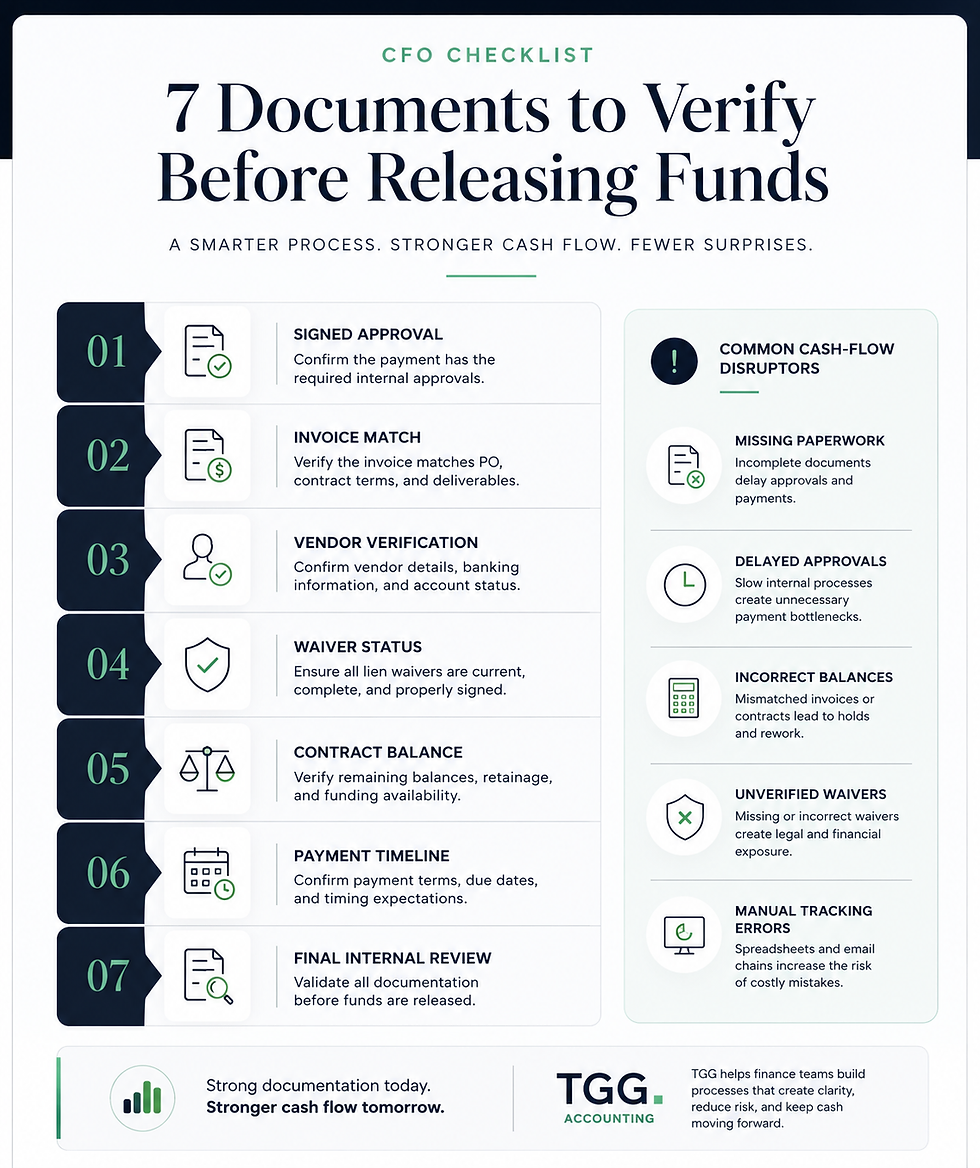
Documentation problems create more financial disruption than most executives expect. Missing waivers, incomplete approvals, unsigned contracts, or mismatched payment records can stall transactions that companies were counting on to close quickly.
CFOs should treat documentation as an active financial control, not administrative clutter. Every payment cycle should include verification steps that confirm records are complete before funds are released.
A reliable checklist often includes:
Signed payment approvals
Updated invoice records
Vendor verification details
Current waiver documentation
Confirmation of payment timelines
Matching contract terms and balances
Internal approval tracking
These steps reduce the likelihood of disputes while also protecting future cash flow. When documentation standards remain inconsistent, finance teams spend more time chasing missing information than managing actual strategy.
Reduce Payment Delays
Late payments create ripple effects that travel through the entire organization. Vendors tighten terms. Teams lose visibility into available cash. Leadership starts making decisions based on outdated numbers instead of real-time financial conditions.
Finance leaders focused on tackling late payments usually prioritize communication and visibility first. Vendors should know exactly what documentation is required. Internal departments should understand approval deadlines. Payment statuses should never depend on searching through inboxes or waiting for verbal updates.
Technology helps, but software alone does not solve operational disorder. Companies still need accountability. Someone must own the process from submission through payment release.
CFOs should also monitor recurring delay patterns. If the same vendors consistently submit incomplete records, that issue needs correction early. If approvals regularly stall inside one department, leadership should address the workflow before it affects larger financial planning.
Small inefficiencies compound faster than most companies realize. A few delayed payments may not seem serious in isolation, but repeated friction can destabilize forecasting across an entire quarter.
Improve Visibility
One of the biggest causes of cash-flow volatility is incomplete visibility. Leadership cannot make strong financial decisions when critical information sits in disconnected spreadsheets, scattered email chains, or outdated reports.
Modern finance teams need centralized reporting systems that track obligations, approvals, receivables, and pending releases in real time. CFOs should be able to identify bottlenecks quickly instead of discovering problems after cash reserves tighten.
That operational visibility becomes even more important during periods of growth. More clients, more vendors, and more transactions naturally increase financial complexity. Without stronger oversight, scaling operations can accidentally create instability.
Resources from TGG-Accounting.com frequently emphasize the importance of creating scalable financial infrastructure instead of relying on reactive bookkeeping habits. Businesses that prioritize reporting accuracy and process consistency tend to make faster, more confident financial decisions.
Visibility also improves relationships with lenders, partners, and vendors. Organizations with organized reporting and disciplined financial controls typically inspire greater trust because they appear prepared instead of reactive.
Protect Working Capital
Cash-flow whiplash usually happens when businesses lose control over timing. Payments arrive later than expected while obligations continue arriving right on schedule. That mismatch forces leadership into defensive decision-making.
Protecting working capital requires proactive oversight. CFOs should regularly review payment cycles, outstanding approvals, aging receivables, and unresolved documentation issues before they become urgent problems.
Financial discipline matters most when business is growing quickly. Expansion often masks operational weaknesses because revenue temporarily covers inefficiencies. Eventually, though, poor processes catch up. That is when companies suddenly discover how fragile their cash position really was.
The strongest finance teams understand that operational structure is not bureaucracy. It is protection. Reliable systems create predictability, and predictability gives leadership room to make smarter long-term decisions instead of constantly reacting to financial surprises.
Cash-flow stability depends on more than revenue alone. It depends on documentation accuracy, consistent approval systems, and strong financial visibility across the organization. CFOs who tighten these operational controls position their companies to move faster, reduce disputes, and avoid the kind of payment instability that disrupts growth.